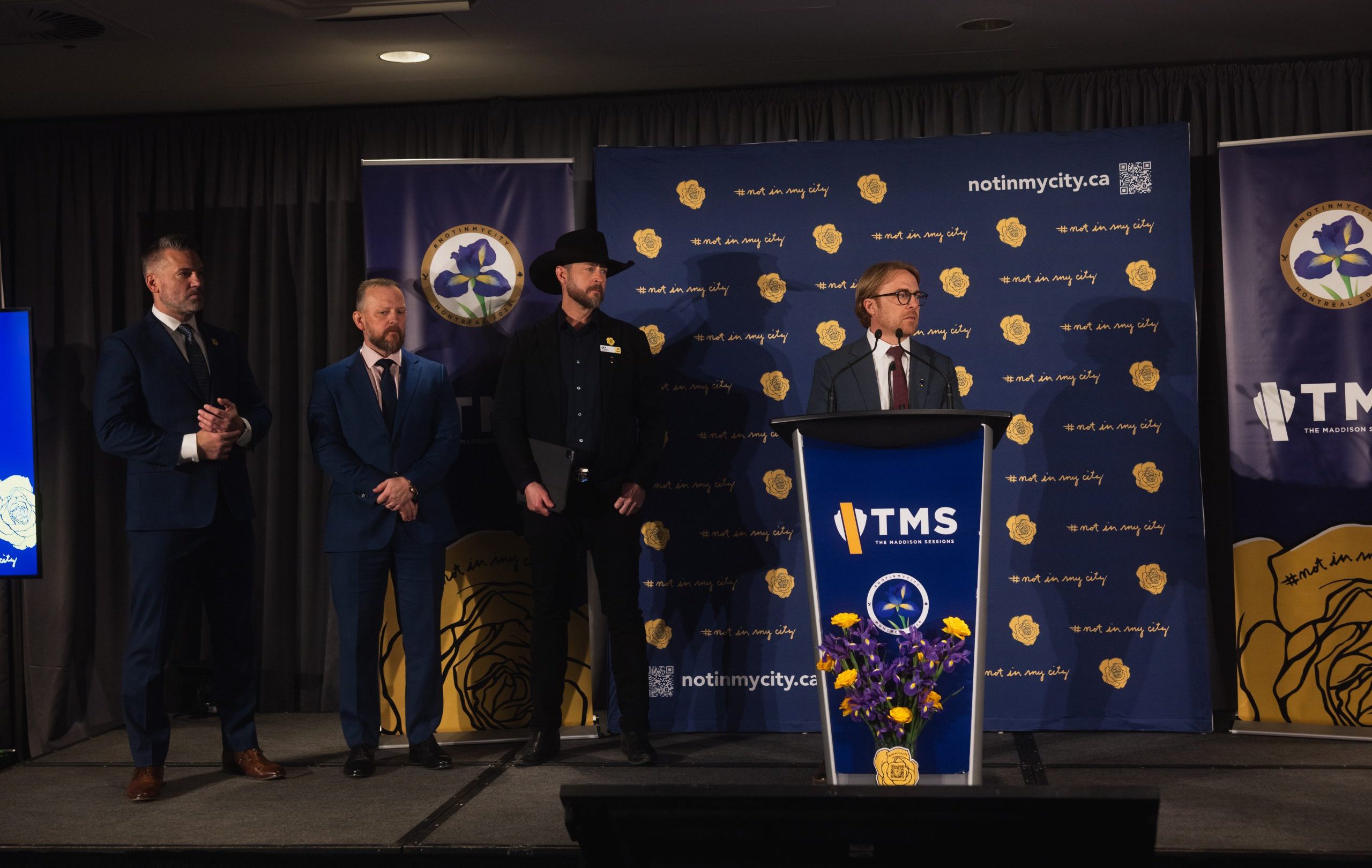
The Maddison Sessions (TMS), powered by #NotInMyCity, is an annual law enforcement conference that brings together law enforcement, crown prosecutors, and survivors to share best practices and resources in the fight against human trafficking and sexual exploitation in Canada.
The conference is named in honour of Maddison Fraser, a 21 year old Canadian woman who lost her life to trafficking in 2015. Her mother, Jennifer Holleman continues to be an outspoken advocate for the fight against human trafficking in Canada, calling for stronger collaboration among investigators across the country. Through Jennifer and the work of The Maddison Sessions, Maddison’s legacy has grown into one of hope, action, and connection—uniting investigators across the country to better protect vulnerable individuals from exploitation.
Held in Montreal this past month, the fourth annual TMS was the most attended to date, continuing to grow as an important space for collaboration and learning. Centred around the theme “Intelligence Without Borders,” this year’s event focused on the importance of sharing information, breaking down silos, and working together across agencies, sectors, and even countries to better protect communities from trafficking.
Sharing Intelligence: Key Learnings from London’s Metropolitan Police
One of the highlights of TMS 2026 was a presentation from the Metropolitan Police and National Crime Agency, who shared how the United Kingdom is using intelligence, technology, and partnerships to proactively identify and disrupt trafficking networks.
Their message was simple: information is only useful if it is shared across jurisdictions and acted on effectively.
Presenters explained how UK agencies work together to connect information from frontline officers, investigations, public tips, and national databases to identify patterns and respond faster. They also shared examples of how technology is helping spot trafficking risks in real time, including airport operations that are starting to use AI and travel data to identify potential victims.
The presentation also highlighted the importance of victim support and investigator well-being. It’s important to have “survivor navigators”, or “safety network coordinators,” as they are more often called in Canada, to help support victims throughout investigations and the justice process, while investigators are encouraged to prioritize mental health and peer support due to the difficult nature of the work.
Many of the challenges discussed in the UK closely mirror what Canada is experiencing today. The UK representatives emphasized the need for stronger collaboration between municipal, provincial, and federal agencies, as organized crime groups continue to evolve quickly and operate across borders.
Cross-Provincial Cooperation in Action
A powerful example of a “win” for investigators came from two officers working in different provinces who disrupted a trafficking situation two times, thanks to relationships built through The Maddison Sessions.
The case began when a 16-year-old girl was lured from Quebec and taken to Ontario. An Ontario investigator quickly tracked the trafficker, built a strong evidence package, made an arrest, and located the victim just before she was moved again. She was safely returned to her family with support from Criminal Intelligence Service Canada (CISC) and the Montreal Police.
However, the same victim was later targeted again in Montreal. A new trafficker spent weeks grooming her online before arranging an Uber to transport her from the South Shore suburb to the city. She was later located by Montreal Police and recovered safely after a 911 call, and the trafficker was charged with obstructing justice and breaching conditions.
What made both interventions possible was not just strong policing, but strong relationships. The officers involved credited their ability to move quickly and share information across jurisdictions to meeting in person at The Maddison Sessions in Saskatoon in 2025. That face-to-face connection built trust and confidence, allowing them to collaborate without hesitation in a time-sensitive situation.
Collaboration is the Key to Ending Exploitation
Discussions at this year’s Maddison Sessions reinforced an important truth: no one organization can combat human trafficking alone. Progress depends on continued strengthening of partnerships, shared intelligence, and a collective commitment to protecting communities.
Four years in, TMS continues to grow as a powerful platform for education, collaboration, and action, helping drive forward human trafficking prevention and survivor support across Canada.
To learn more about human trafficking and this year’s Maddison Sessions from the perspective of law enforcement and #NotInMyCity Founder Paul Brandt, read this article.
To learn more about how you can be part of the difference, visit notinmycity.ca.
To learn more about how you can be an ally, and to stay tuned for future fundraising events, follow #NotInMyCity on Instagram or Facebook!